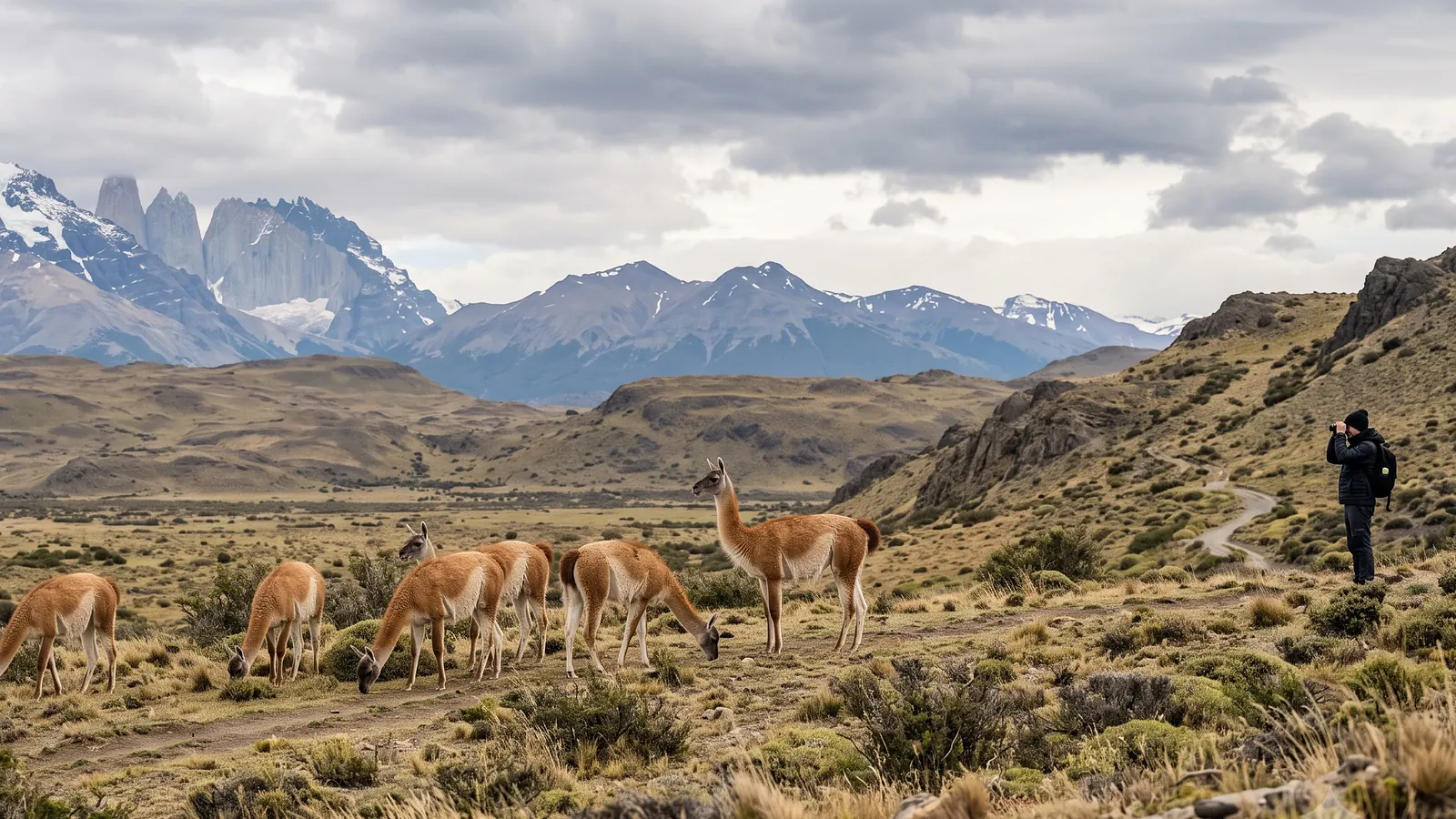
If you searched for a zoo in Puerto Natales, this guide deliberately takes a different direction. The meaningful experience is watching wild animals living freely, not treating them as exhibits. Ethical wildlife watching means keeping enough space for normal behaviour, never feeding or touching an animal, and accepting that no sighting can be guaranteed.
Correcting the zoo expectation
Historical Search Console data connected this topic with “Puerto Natales zoos.” Repeating that framing would misrepresent the destination. A responsible encounter has three qualities: the animal can leave, the observer does not change its behaviour, and access follows the rules of the land or protected area.
Chile’s Agricultural and Livestock Service, SAG, oversees wildlife protection and public guidance. CONAF adds visitor rules within protected areas. Trail closures, ranger instructions and unit-specific regulations always override a travel article or tour description.
What to do when wildlife appears
Stop and assess before moving. If an animal changes direction, stops feeding, groups defensively or remains focused on you, move farther away. There is no universal distance in this article because species, terrain, behaviour and local regulation differ.
Use binoculars or a zoom lens. Do not call, whistle or play sounds to attract wildlife. Never block an escape route or position yourself between young animals and the group. Follow local rules for pets; protected areas may prohibit them.
Do not feed wildlife, even with food presented as natural. Feeding changes diet and behaviour, encourages animals to approach roads and people, and can create avoidable conflict.
Guanacos are an example, not a booking promise
The guanaco is a wild camelid documented in Chile’s official species classification systems. Its conservation classification in the far south can be checked through the Ministry of the Environment and SAG.
Including guanacos in this guide and proposed artwork does not mean they will be near town, the cabins or a chosen road. We do not publish group coordinates, breeding locations or guaranteed times. A tour that promises close contact or uses food to stage photographs does not meet this ethical standard.
Injured or abnormal animals
Do not capture or transport wildlife. Keep other people back, record the location from a safe position and contact SAG for instructions. If the animal is beside a road, slow down and stop only where legal and safe. Never block traffic for a photograph.
Inside a protected area, notify CONAF staff. Untrained intervention can increase stress, cause injury and expose people or animals to disease.
What few wildlife guides mention
A day without animals is not a failed outing. Habitat, tracks and distant behaviour still teach you how the landscape works. Demanding a photograph encourages the worst choices: leaving authorised trails, approaching by vehicle or broadcasting sensitive sites.
Photography also shapes perception. Avoid angles that make human proximity look acceptable. Keep enough environmental context to show that the encounter occurred at a respectful distance.
Summary
- Choose wild observation, not zoo or captive framing.
- Let behaviour and local rules determine distance.
- Never feed, touch, chase or block an animal.
- Report injured or abnormal wildlife to SAG rather than rescuing it.
- Do not publish sensitive coordinates or guarantee sightings.
Related reading
A base without wildlife promises
Estepa Patagónica can be your base for authorised outings and a quiet return after observation. Check cabin availability on the official website or use the official WhatsApp listed there. The accommodation does not guarantee animals on the property or sightings during your stay.